

Stamp Duty in West Bengal 2026: The Rates Almost Every Guide Gets Wrong
If you have been budgeting for a flat in Kolkata using a stamp duty figure you found online, there is a good chance it is wrong. Not slightly wrong. Wrong by a full percentage point, on the largest cheque you will write outside the flat itself.
Here is what stamp duty in West Bengal actually costs in 2026, taken from the Directorate of Registration and Stamp Revenue's own published table rather than from another blog quoting another blog.
The current rates, from the government's own table
These slabs took effect on 1 February 2018 and remain current.
| Property market value | Kolkata / Howrah Corporation | Municipal or Notified Area | Panchayat Area |
|---|---|---|---|
| ₹1 crore and below | 6% | 6% | 5% |
| Above ₹1 crore | 7% | 7% | 6% |
On top of that:
- Registration fee: 1% of market value, subject to a minimum of ₹50.
- Additional stamp duty: 1% where the market value exceeds ₹1 crore, in both urban and rural areas.
- Standard user charge: ₹300 for up to 17 pages, ₹9 per page beyond that.
The mistake nearly every other guide makes
Search this topic and you will repeatedly be told that the rate is "6% up to ₹25 lakh and 7% above ₹25 lakh". That was true. In 2007.
The threshold has been raised three times since: to ₹30 lakh in 2015, to ₹40 lakh in 2018, and then to ₹1 crore, which is where it sits today. Anyone still publishing the ₹25 lakh figure is working from a slab that is nearly two decades out of date.
The difference is not academic. On a ₹55 lakh flat in Kolkata, the outdated advice tells you to budget 7% duty plus 1% registration, which is ₹4.4 lakh. The correct figure is 6% plus 1%, which is ₹3.85 lakh. That is ₹55,000 you were told to set aside and did not need to.
Where the phantom "5%" comes from
You will also see 5% quoted, usually in worked examples. That is a genuine rate, but it expired. West Bengal ran a 2% remission on stamp duty along with a 10% reduction in circle rate during the pandemic recovery period. The government's own notice is unambiguous: that remission was discontinued with effect from 1 July 2024.
If a calculator or agent quotes you 5% in a Kolkata Corporation area today, they are working from a concession that no longer exists.
What this actually costs on real budgets
Assume a Kolkata Corporation address, which covers most of the city proper.
- ₹40 lakh flat: 6% duty (₹2.40 L) + 1% registration (₹40,000) = ₹2.80 lakh
- ₹55 lakh flat: 6% duty (₹3.30 L) + 1% registration (₹55,000) = ₹3.85 lakh
- ₹95 lakh flat: 6% duty (₹5.70 L) + 1% registration (₹95,000) = ₹6.65 lakh
- ₹1.5 crore flat: 7% duty (₹10.50 L) + 1% additional (₹1.50 L) + 1% registration (₹1.50 L) = ₹13.50 lakh
Notice the cliff at ₹1 crore. Crossing it moves you from 7% all-in to 9% all-in. If you are negotiating around that line, the difference between ₹99 lakh and ₹1.01 crore is far larger than ₹2 lakh.
Duty is charged on market value, not your price
This catches people out more than the rate does. Stamp duty is calculated on the government's assessed market value, not on what you negotiated. If the circle rate says the flat is worth ₹60 lakh and you bought it for ₹55 lakh, you pay duty on ₹60 lakh.
Generate the official e-Assessment Slip through the West Bengal Registration portal before you finalise your budget. It gives you the assessed value the department will actually use, which removes the guesswork entirely.
Two ways the rate legitimately drops
Panchayat areas. Property in a Panchayat area attracts 5% below ₹1 crore rather than 6%. Several of the growth corridors around Kolkata fall outside corporation limits, so it is always worth confirming which category an address sits in before you assume the city rate.
Transfers within a family. A gift to a family member is charged at 0.5% of market value, capped at ₹1,000, rather than at conveyance rates. Partition of a jointly held property is also 0.5%. These are narrow provisions with strict definitions, so take proper advice rather than assuming you qualify.
What else lands on top
Stamp duty and registration are the statutory costs, but they are not the whole picture. On an under-construction purchase you will also face GST, and most projects charge separately for parking, the maintenance corpus and legal documentation. Our guide to what a Kolkata flat really costs, all-in walks through the full stack.
If you are funding the purchase with a loan, remember that lenders fund a percentage of the agreement value and never the duty. That money has to come from you, on top of the down payment. Our home loan guide for Kolkata buyers covers how that is sized.
Budget it properly before you shortlist
The practical rule: on anything under ₹1 crore in Kolkata, set aside 7% of the assessed value for duty and registration together, and confirm the assessed value rather than using your negotiated price. Above ₹1 crore, make it 9%.
Get that number right and the rest of the shortlist becomes much simpler. If you want it calculated against a specific project, our property legal and loan help desk will run it for you, and you can browse every verified flat, villa and plot we represent.
We are a RERA-registered agent, WBRERA/A/HOW/2025/000651. Rates above are from the Directorate of Registration and Stamp Revenue, West Bengal. Verify current rates on the official portal before you transact, since slabs can change with the state budget.
The same flat, three districts, three registration bills
Stamp duty in West Bengal moves with the district and the property value, so it is worth comparing projects across the three we work in.
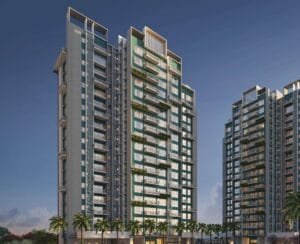
Kolkata — DTC Downtown, Rajarhat, from ₹63 L. Six towers at B+G+29 across 10 acres.
Howrah — Joyville Parkside, Santragachi, ready 2 and 3 BHK. Completed stock, registered under WBRERA/P/HOW/2024/001275.
Hooghly — Urban Lakes Phase 2, Konnagar. Eight towers on nine acres around three natural lakes (WBRERA/P/HOO/2024/002161).
Keep reading
The legal and money side, explained
Stamp duty, loans, RERA and title, set out plainly and checked against the source.
 Investing & RentingCommercial Property in Kolkata
 LocalitiesReal Estate Developers in Kolkata
 Buying GuidesNRI Buying Property in Kolkata
 Legal & LoansBuying Land in Howrah or Hooghly
 Investing & RentingHow to Rent Out Your Flat in Kolkata
 Buying GuidesFirst Time Home Buyer in Kolkata
 Buying GuidesBuying a Resale Flat in Kolkata
 Buying GuidesVastu Tips for Buying a Flat
 Investing & RentingRental Yield in Kolkata
 LocalitiesFlats in New Alipore & Tollygunge
 Investing & RentingKolkata Property Price Trends 2026
 LocalitiesBest Areas to Buy a Flat in Kolkata
 Buying GuidesFlats in Kolkata Under ₹1 CroreInvesting & RentingCommercial Property in KolkataLocalitiesReal Estate Developers in KolkataBuying GuidesNRI Buying Property in KolkataLegal & LoansBuying Land in Howrah or HooghlyInvesting & RentingHow to Rent Out Your Flat in KolkataBuying GuidesFirst Time Home Buyer in KolkataBuying GuidesBuying a Resale Flat in KolkataBuying GuidesVastu Tips for Buying a FlatInvesting & RentingRental Yield in KolkataLocalitiesFlats in New Alipore & TollygungeInvesting & RentingKolkata Property Price Trends 2026LocalitiesBest Areas to Buy a Flat in KolkataBuying GuidesFlats in Kolkata Under ₹1 Crore
 LocalitiesFlats in Behala on the Purple Line
 Buying Guides2 BHK or 3 BHK in Kolkata?
 LocalitiesProperty in Howrah, Pocket by Pocket
 LocalitiesFlats Near Metro Stations in Kolkata
 Legal & LoansParcha, Mutation & Khajna Explained
 Legal & LoansHome Loan in Kolkata: Eligibility & EMI
 LocalitiesNew Town vs Rajarhat vs Salt Lake
 Buying GuidesFlats in Kolkata Under ₹60 Lakh
 Buying GuidesUnder Construction vs Ready to Move
 Legal & LoansWhat a Kolkata Flat Really Costs
 LocalitiesFlats in Joka After the Metro
 Legal & LoansHow to Verify a RERA Number
 LocalitiesProperty in UttarparaLocalitiesFlats in Behala on the Purple LineBuying Guides2 BHK or 3 BHK in Kolkata?LocalitiesProperty in Howrah, Pocket by PocketLocalitiesFlats Near Metro Stations in KolkataLegal & LoansParcha, Mutation & Khajna ExplainedLegal & LoansHome Loan in Kolkata: Eligibility & EMILocalitiesNew Town vs Rajarhat vs Salt LakeBuying GuidesFlats in Kolkata Under ₹60 LakhBuying GuidesUnder Construction vs Ready to MoveLegal & LoansWhat a Kolkata Flat Really CostsLocalitiesFlats in Joka After the MetroLegal & LoansHow to Verify a RERA NumberLocalitiesProperty in Uttarpara